Featured Vehicle

1980s Aerocoupes: NASCAR’s Secret Weapon and the Rarest of Street Warriors
unknown's 1986 Pontiac Grand Prix 2+21980s Aerocoupes: NASCAR’s Secret Weapon and the Rarest of Street Warriors
Benjamin Hunting
16 June 2025
Once upon a time, NASCAR was more than just a spec series that relied primarily on decals to differentiate one manufacturer’s body shape from another. Maybe that’s a bit unfair as a description of the current vibe of America’s most popular oval racing series, but it’s certainly true that in previous decades there was far more variance from one competitor’s entry to the next, which made them easily identifiable to fans in the stands.
In fact, NASCAR rules used to feature a fair amount of leeway when it came to what a stock car could look like, as long as it bore a close-enough resemblance to models that were sold in showrooms the Monday morning following the race. This was a different type of permissiveness than today’s standard, where Toyota can get away with sculpting a two-door coupe out of fiberglass with a four-door Camry sedan’s name slapped on the front bumper. Instead of the track cars winking their way into accommodating the marketing needs of the mothership, it was product planners on the hot seat who were forced to come up with a business case for building race-friendly autos that customers might actually want to buy.
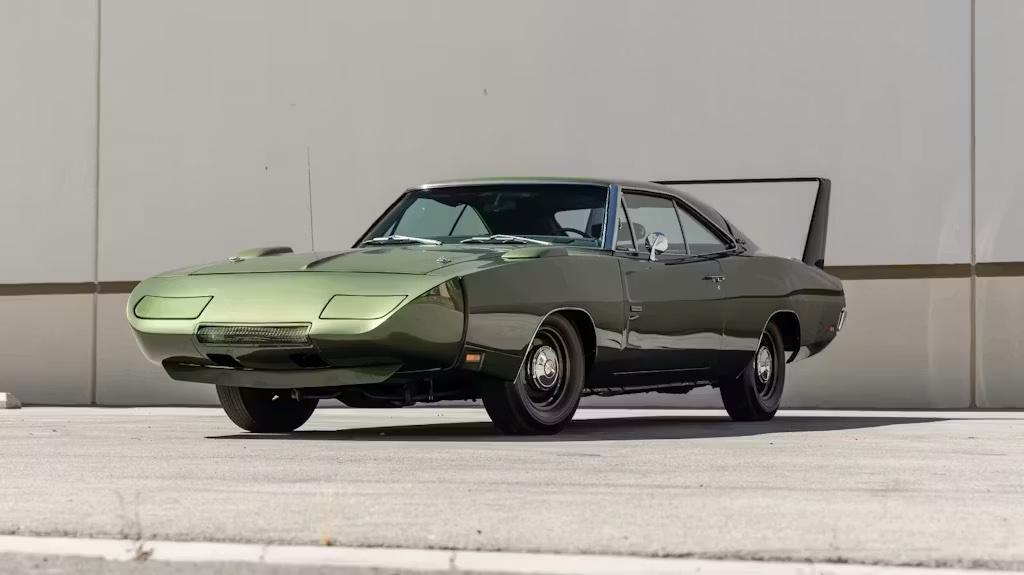
1969 Dodge Charger Daytona Mecum
Perhaps the most famous example of this cross-pollination is the winged car phenomenon of the late 1960s and early 1970s, when Dodge and Plymouth sent Charger Daytonas and Superbirds onto dealer lots (where their super-tall trunk spoilers languished under the withering stare of conservative shoppers). Less well known, however, was the 1980s revival of this same concept, when automakers battled it out to build slippery shapes that could pull double duty on the starting grid and (hopefully) in the garages of performance-obsessed enthusiasts.
Known as “aerocoupes,” they represented the last time American car companies took the chance on leveraging their production design resources to gain an advantage on the starting grid. Although their time was brief—canceled out by overall improvements in aerodynamics that saw a sea change in the looks of nearly every passenger car on the market—rare survivors have become a welcome oddity for collectors eager to embrace their motorsports history.
Don’t Be a Square
By the middle of the 1980s, it was clear there was a revolution underway when it came to automotive design. Little by little, engineering advances and regulatory changes were making it possible to abandon the blocky shapes that had defined much of the previous decade in favor of sheet metal that curved and swooped itself into forms that generated far less drag.
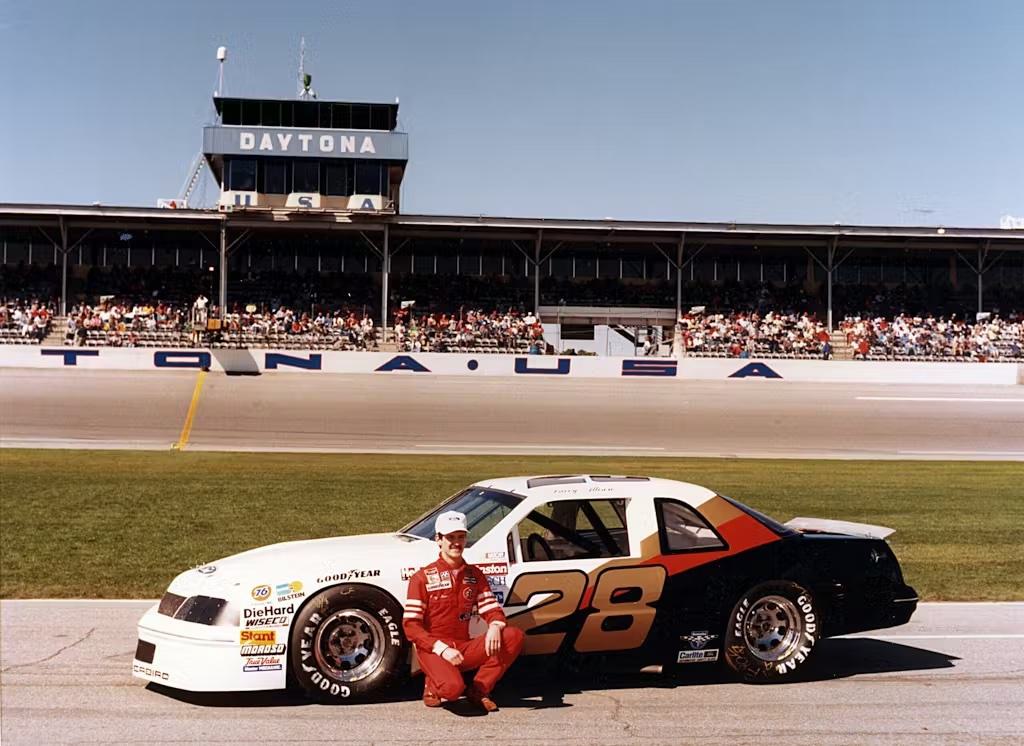
In 1987, Davey Allison won two NASCAR Winston Cup Series races during his rookie season in the sleek Ford Thunderbird.ISC Archives/Getty Images
Unfortunately for General Motors, cross-town rival Ford was at the forefront of these changes, being among the first OEMs to take advantage of the National Highway Traffic Safety Administration’s loosening of its sealed-beam headlight requirement, a straightjacket that dictated upright front end design for far too long. The 1986 Ford Taurus implemented a composite headlight that was flush with the vehicle’s body work, which gave it an important advantage in the wind tunnel. While the Taurus intended to use its enhanced slipperiness to improve fuel economy, the Blue Oval planned to gift the same illumination to its NASCAR competitor, the Thunderbird—a model whose sleek shape (which had first debuted in 1983) was already head and shoulders above the 90-degree countenance of the G-body models fielded by Chevrolet, Pontiac, Buick, and Oldsmobile, especially when measuring top speeds on the back straight.
With an even more aero-friendly refresh of the Thunderbird in the pipeline for the 1987 model year, and the G-body’s lifecycle extending at least a year or two after that, GM was forced to get creative. The end result was a crash-course engineering program aimed at somehow massaging the block-like Chevy Monte Carlo and Pontiac Grand Prix into silhouettes that had more in common with a bird than a brick.
Stretch ’Em Out
Neither Chevrolet nor Pontiac—GM’s prime movers in NASCAR competition—were prepared to completely retool G-body production simply to win on Sunday. That meant any changes had to work around the existing square framework of the coupes.
A tried and true strategy when improving an automobile’s aerodynamics is to extend its trailing edge, tapering it so as to reduce the amount of pressure-caused drag. “Kammback” racers from the 1960s and ’70s took advantage of the benefits of stretched bodywork in sports car competition, as did GM’s pioneering EV1. Even today’s semitruck setups sometimes offer tack-on panels designed to do the same at the back of a cargo trailer.
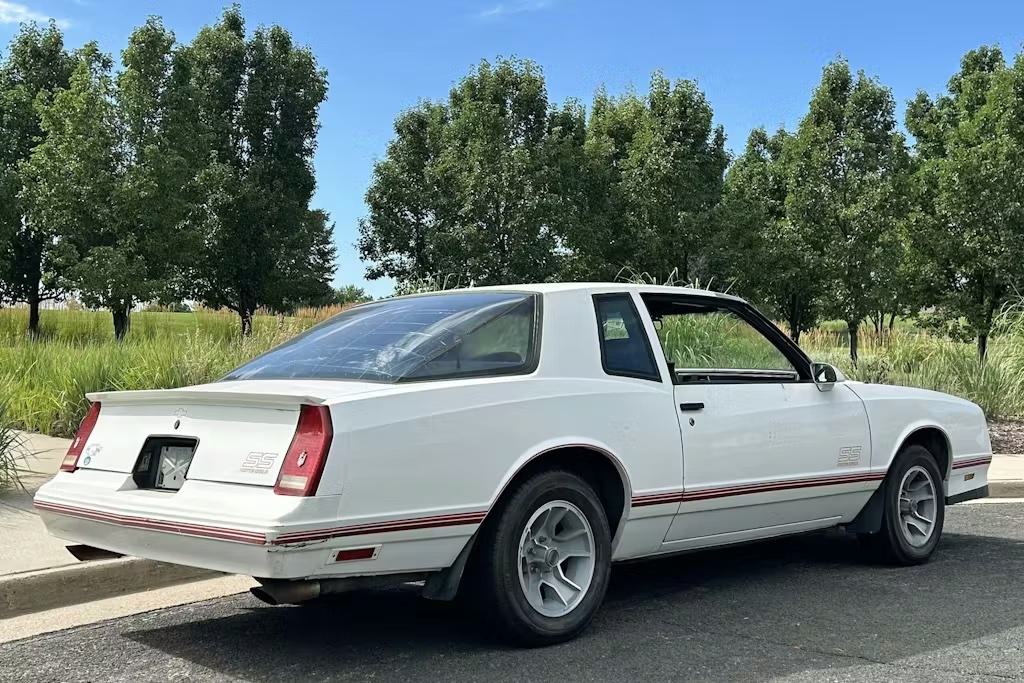
Hagerty Marketplace/RRBill
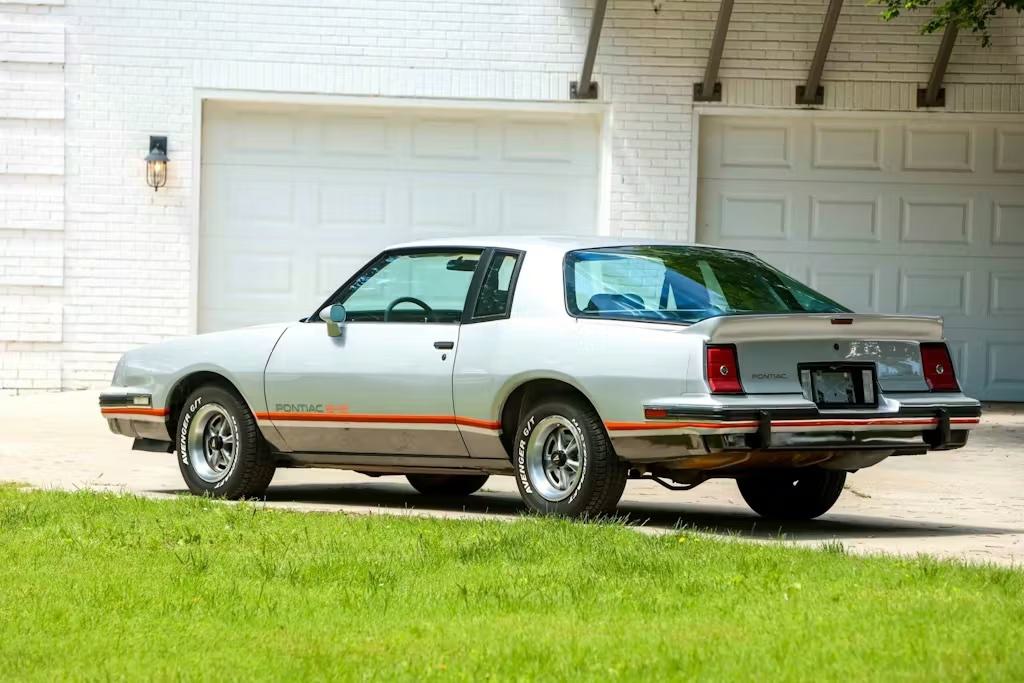
Hagerty Marketplace/Ryan Merrill
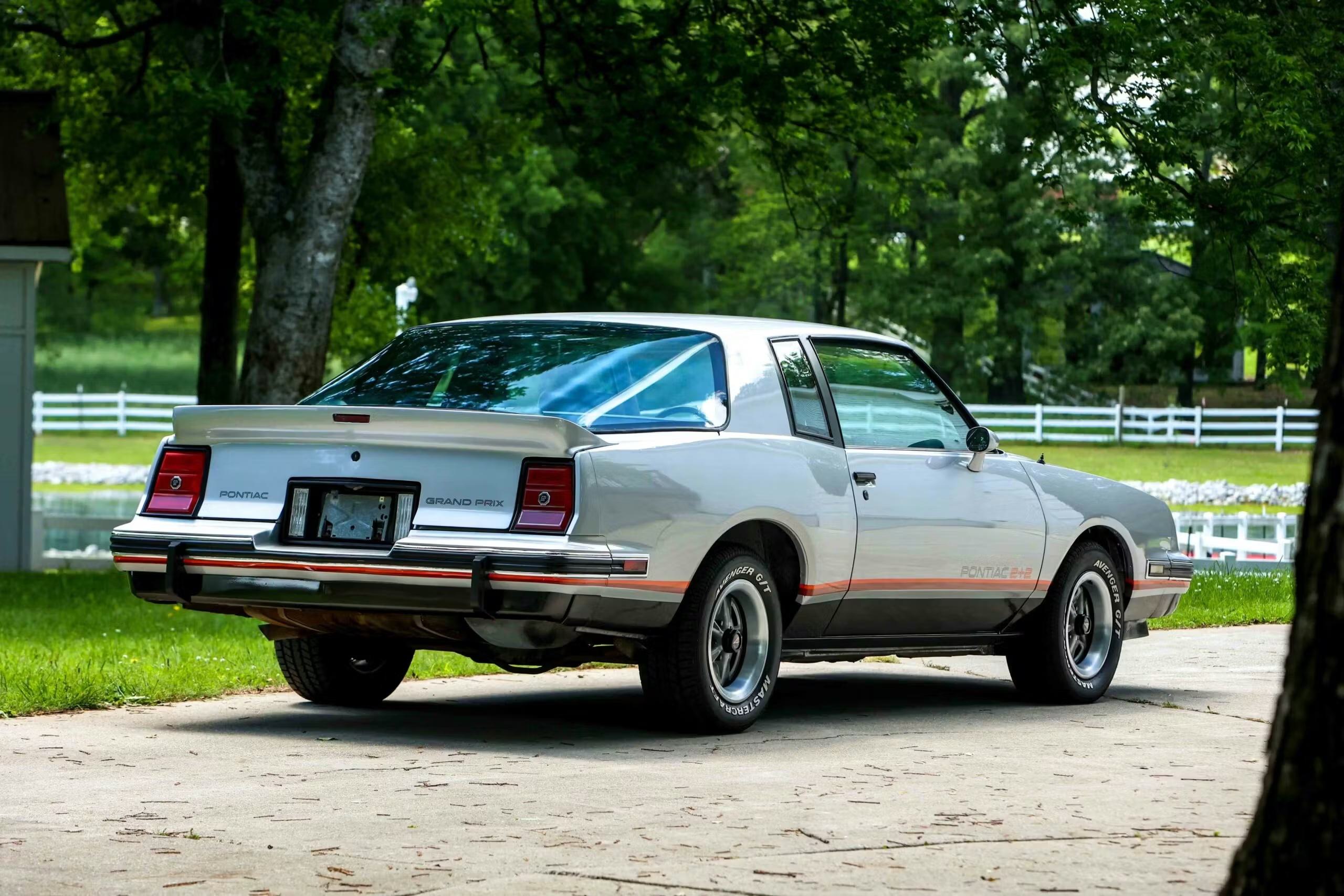
Although new sheet metal was out of the question, the rear glass of both the Chevrolet Monte Carlo SS and the Pontiac Grand Prix offered a tantalizing opportunity to ape the shape of the Ford Thunderbird’s deck. By stretching out the glass to nearly mid-way (Chevrolet) or the three-quarter mark (Pontiac) down the trunk lid, both cars could effectively extend their profiles and reduce wake turbulence and back pressure drag at the same time—all relatively cheaply, given that the only major update was a new “notchback” trunk to accommodate the modified glass. Up front, a similar extension was in place, pushing the nose of each car downward with a new front clip.
This one simple change paid immediate dividends on the race track. Gone was the edginess that the G-body had displayed when driving in tightly packed superspeedway traffic, and in its place was a 3% drag improvement that added more than a few miles per hour when entering corner four at tracks like Talladega (where Ford flaunted its aerodynamic dominance). With drag coefficients in the 0.36 range, GM’s special G-bodies were finally within spitting distance of the Thunderbird’s 0.35 rating on the street, and in NASCAR that translated directly into wins: Dale Earnhardt won the Winston Cup in both 1986 and 1987 behind the wheel of the freshly minted Monte Carlo SS Aerocoupe.
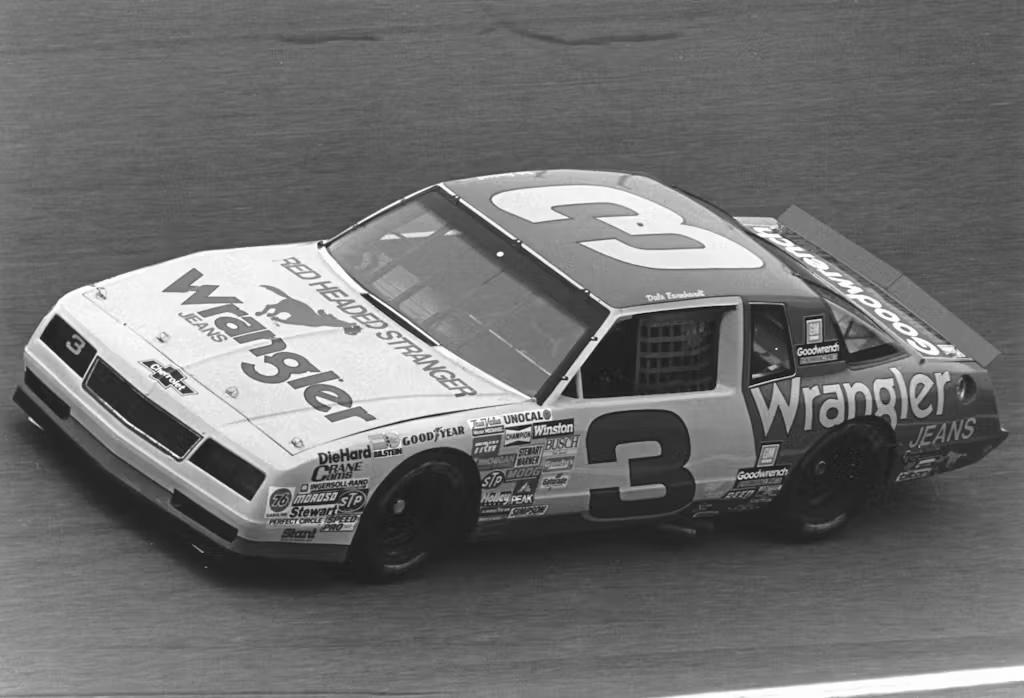
But for the first two races, Dale Earnhardt led the points standings all year long in 1987.ISC Archives/Getty Images
Two Paths Diverged on an Assembly Line
Despite ostensibly playing for the same team, implementations of the Kammback strategy made by Chevy and Pontiac were actually unique, and they were assembled by different Michigan-based third-party shops after being plucked from the production line. The Monte Carlo’s triangular, 25-degree rear window bubble looked a lot like someone plopping a greenhouse down on the existing trunk and calling it a day. Pontiac, on the other hand, actually made the effort to sculpt its new glass into revised body work along the rear deck, integrating it into a larger, curved-edge spoiler that sat at the very tip of the trunk lid (versus a simple flip-up spoiler for the Chevrolet).
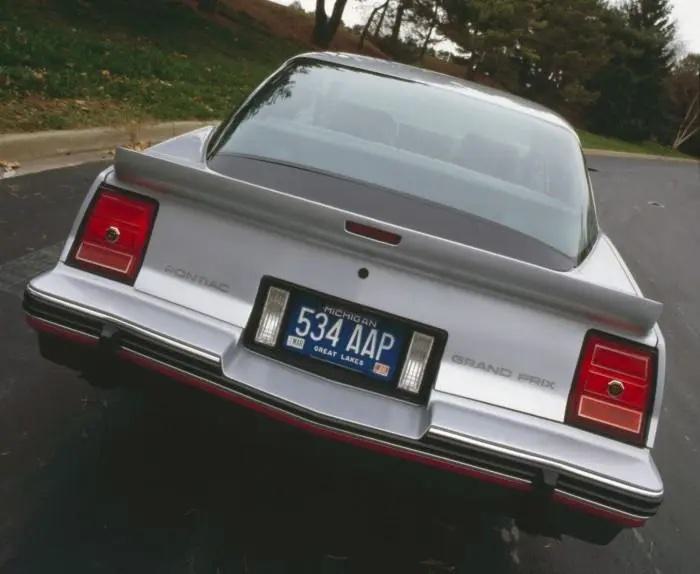
1986 Pontiac Grand Prix 2+2
Over the years there have been reports that the more polished look of the Grand Prix package was tied to Pontiac tagging-in its NASCAR team chiefs for advice, while also doing extensive wind tunnel testing. In contrast, Chevrolet reportedly asked its engineers to come up with something quick and cheap, without much concern for how it looked or the details of its ultimate performance at speed (with the assumption that NASCAR teams could handle tunnel tweaking on their own time).
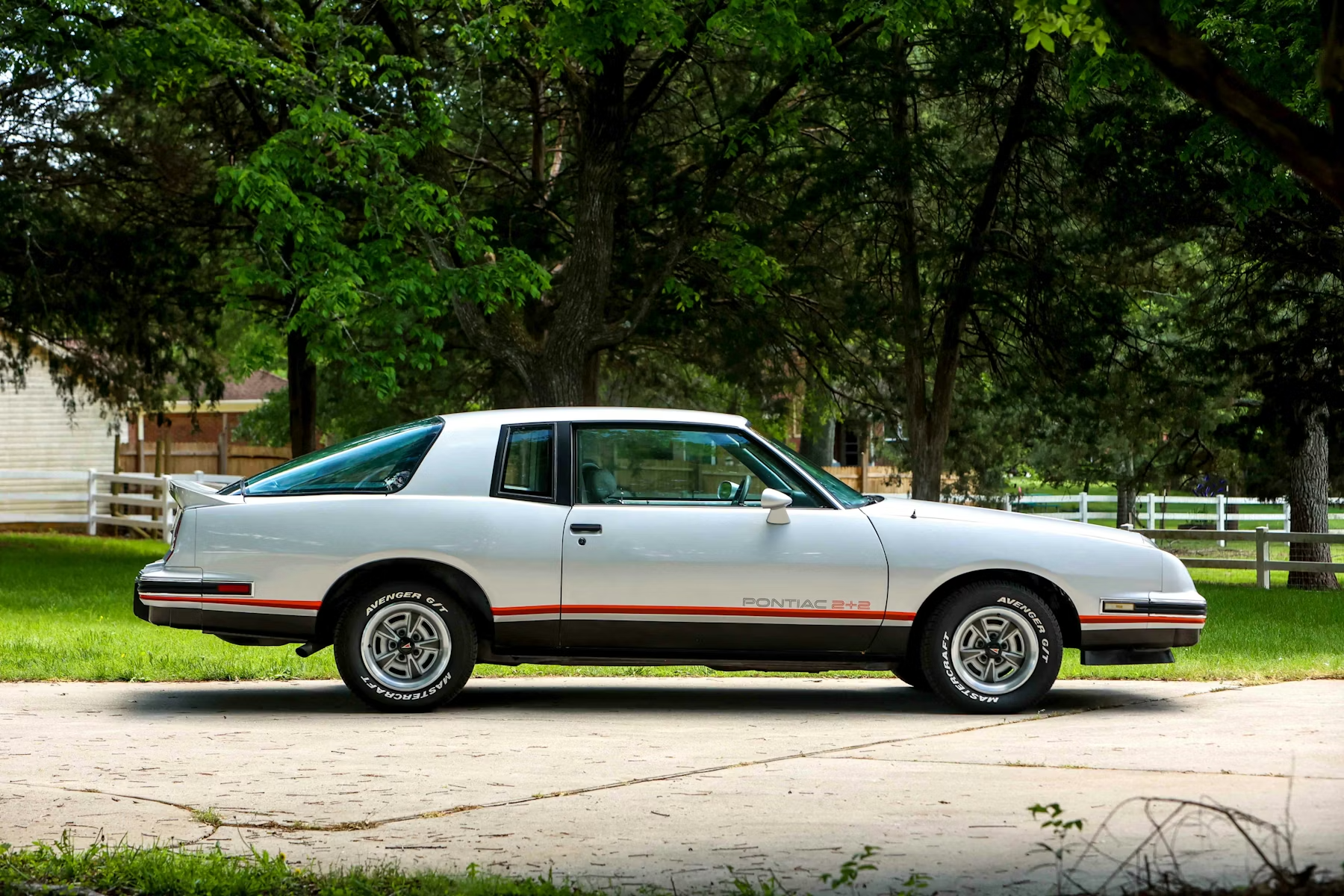
In addition to their unusual rear quarters and bespoke noses, the Monte Carlo—officially labeled the “Aerocoupe”—also gained a few other features: a 3.78 rear gear ratio, dual exhaust, F41 suspension package, 15-inch alloy wheels, and a tachometer. The Grand Prix—simply branded the “2+2”—was given a bespoke red-striped, silver-paint appearance package, complete with a fiberglass trunk lid.
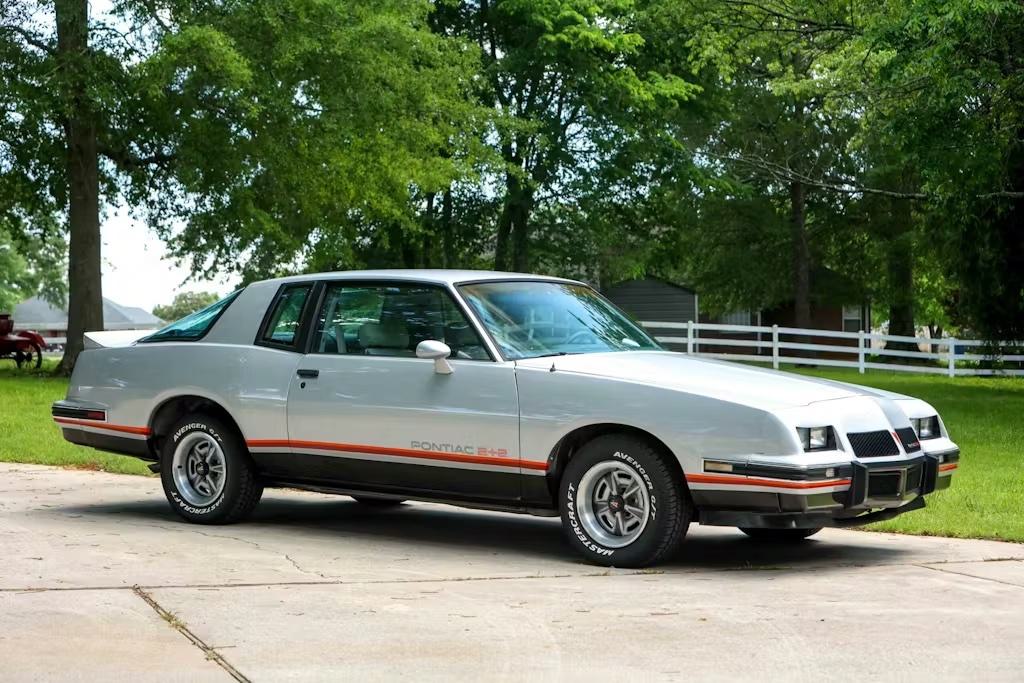
1986 Pontiac Grand Prix 2+2Hagerty Marketplace/Ryan Merrill
The Pontiac also came with a 3.08 gear set, which didn’t do its standard 165-horsepower, 305-cubic-inch V-8 any favors (nor did its four-speed automatic gearbox). The Chevy was marginally quicker, what with 180 horses from a same-displacement V-8 and a more aggressive rear axle, but neither model was especially impressive in a straight line.
Ultimately, they didn’t have to be. General Motors wasn’t marketing either model to gain credibility with real-world customers, but rather simply to homologate the body changes with NASCAR. In order to make things officially official, 200 examples of the Monte Carlo were made available during their first year of production in 1986, with Chevrolet obliterating that figure by selling more than 6000 in 1987. Pontiac made the 2+2 a single-model-year vehicle and managed to move just over 1200 examples.
Racing History on the Cheap
Both aero-express G-bodies are relatively rare when contrasted against the hundreds of thousands of standard editions—or even the heaping helping of SS Monte Carlos—that were built over the course of the 1980s. That being said, pricing for each remains well within the realm of the affordable: Aerocoupes in #3 (good) condition can be had for just under $24,000, which is about $5K more than you’d pay for the standard two-door. The Pontiac 2+2, despite being thinner on the ground, doesn’t typically outpace its Bowtie-wearing rival.
As conversation pieces, these bubble-glass weirdos are an interesting addition to any gathering of ’80s performance metal. As historical documents, both the Aerocoupe and the 2+2 stand out as underappreciated chapters in NASCAR’s history, from a time when thinking outside the G-body box was encouraged in way that is simply no longer encouraged on the modern racing circuit.
Highlights
Only 1,225 Grand Prix Aerocoupes were built, all in 1986
5.0-liter V8
Four-speed automatic transmission
Finished in two-tone (12) Silver with gray lower paint and red stripe with a gray interior
Features
15-inch wheels wearing 235/60R15
Air conditioning
Power steering, brakes, locks, and windows
Cruise control
HEI ignition
See Your Local Chapter Events
Our chapters often sponsor car shows and other events.